You have a sewer blockage problem and want to understand sewer line replacement cost before you call a plumber. Or maybe you already received a sewer replacement estimate and you're not sure if it sounds right, so you're researching to make sure you're paying a fair price for the right solution.
Sewer line replacement is not a one-price job. There are multiple replacement methods, site conditions, legal requirements, and risk factors that can double or even triple the cost depending on your specific property.
This guide walks through the top 5 factors that impact sewer line replacement cost, explains why each one matters, and shows where costs can move up or down based on your choices and site conditions.
Key Takeaways
A typical residential sewer line replacement cost for a full, properly executed project often falls around $10,000-$20,000, and complex projects can exceed $50,000.
The Five Main Cost Drivers
Sewer Replacement Cost Comparison
1. Sewer Line Replacement Method
The method of sewer line replacement is usually the single biggest factor in determining your total project cost. The three most common methods are:
Each method has different labor needs, equipment costs, and restoration impacts.
+ $3,000-$10,000 setup & reinstatement fees
1-A. Fully Excavated Replacement
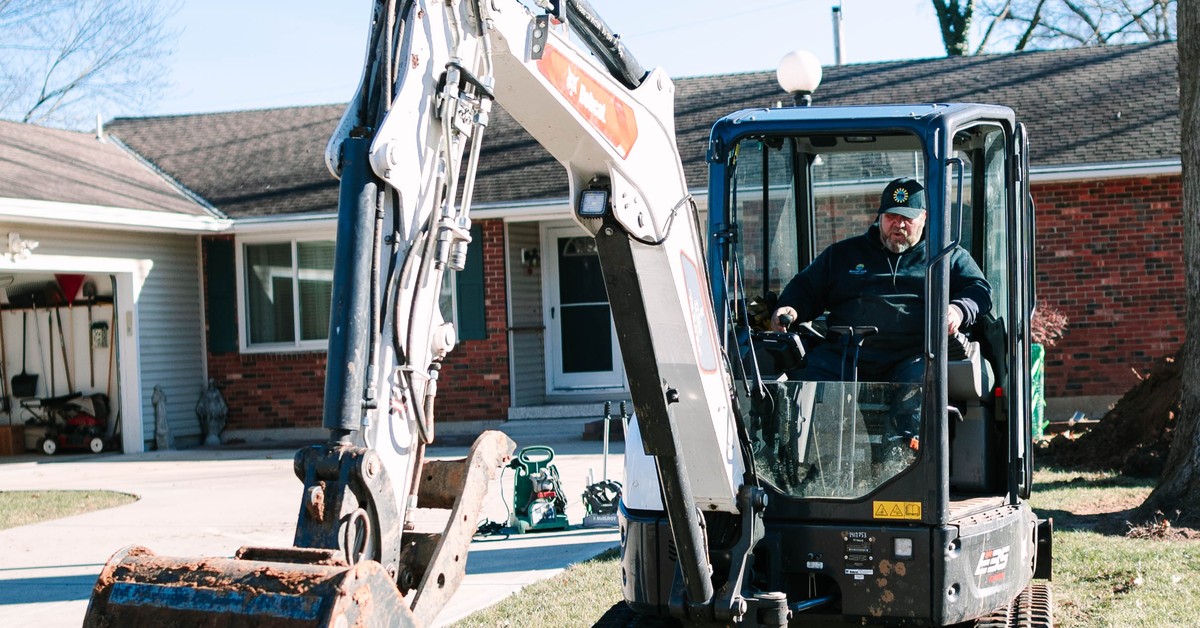
With a fully excavated replacement, the sewer is physically dug up along the section to be replaced, the existing pipe is removed, and a new pipe is installed in its place. When done correctly, this is the most straightforward way to get a brand-new, properly sloped, properly bedded sewer line.
Because it uses standard excavation equipment and materials rather than specialty lining or bursting systems, the plumbing portion of this method is often the least expensive. However, once you factor in landscaping, concrete, and other surface restoration, it can become the highest total cost option.
Technical cost drivers for full excavation:
Depth of the sewer:
Deeper sewers require more powerful equipment, more labor, trench boxes/shoring, and carry higher liability.
Any sewer over 7 feet deep is a high-liability project; costs increase significantly as you go deeper.
Minimum: $3,500 (even for 2ft shallow repair)
Example: 5ft deep = $5,000 base. 10ft deep = $10,000 base.
Over 5ft requires OSHA shoring (adds cost).
Over 7ft = high-liability project. Budget accordingly.
Obstacles Above the Sewer
Typical obstacles include: concrete driveways, streets, sidewalks, buried utilities, retaining walls, home additions, decks, fences, heavy landscaping, and boulders.
These obstacles can require saw-cutting, hand digging, utility locating, traffic control, and specialized restoration.
Significant obstacles can add $3,500-$6,500 or more to a project, and in extreme cases even more, depending on what must be removed and rebuilt.
Accuracy of sewer line locating:
A sewer camera connected to a locator sends a signal through the pipe so the plumber can mark its path and depth.
Deep lines, steep slopes, and electrical interference from nearby power lines or buried utilities can cause inaccurate readings.
Digging a deep hole in the wrong place is one of the most expensive mistakes on a sewer project. Proper locating and camera work do not necessarily reduce the initial quote, but they prevent mid-project cost spikes caused by unexpected conditions.
Landscaping and hardscaping restoration:
Most plumbing contractors include soil backfill and basic flat concrete patching in their estimate.
Premium landscaping, decorative concrete, pavers, irrigation, or custom hardscaping restoration is usually best handled by specialized contractors.
If you're free to choose your own landscapers and concrete professionals, you can often control restoration quality and cost more effectively.
B. Trenchless Excavation (Pipe Bursting)
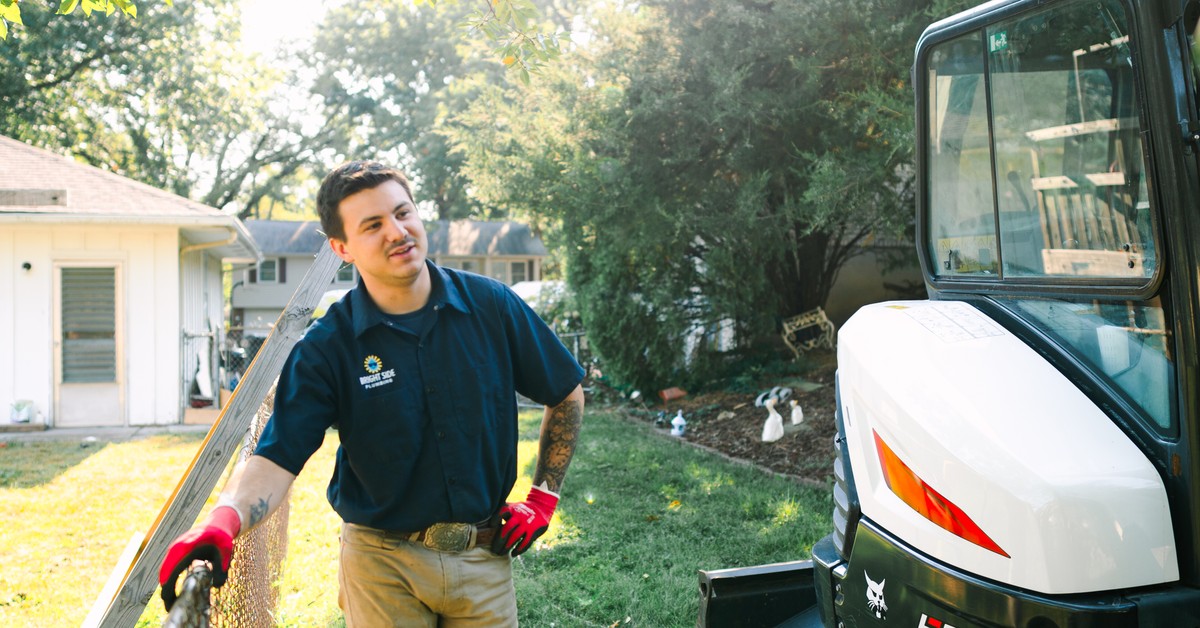
Trenchless excavation (pipe bursting) replaces your sewer without digging a continuous trench. The plumber excavates an access hole at the beginning of the line and another at the end, then uses a hydraulic bursting machine to pull a new pipe through the existing pipe path. A specially shaped bursting head breaks the old pipe outward while drawing the new pipe into place.
If your property has obstacles that make open-cut trenching expensive or disruptive and if your line has a usable path and slope, trenchless pipe bursting can often provide the best balance between upfront cost, long-term performance, and minimal surface damage.
Technical cost drivers for pipe bursting:
Access pits and obstacles:
Even though a trench is not dug along the whole line, each end of the sewer must be excavated.
These pits must be large and stable enough to expose the pipe, fit the bursting machine and rods, and align the new pipe for a clean pull.
The same obstacles that affect full excavation, concrete, utilities, additions, still apply to these pits, but because there are fewer dig points, they are less likely to be encountered along the entire run.
Pipe bursting equipment and technology:
High-quality bursting equipment is a major investment for the contractor, with complete systems easily exceeding $100,000.
Part of your sewer line replacement cost is essentially equipment rental plus the expertise of a crew trained to use it safely and effectively.
The trade-off: you save on surface restoration, time, and disruption compared to a fully open trench.
Accurate sewer location and diagnostics:
Just like with open-cut, the line must be properly inspected and located.
Incorrect assumptions about line path, fittings, or slope can cause failed pulls or require extra pits, which raises cost.
Accurate diagnostics and planning keep cost from rising mid-project, even if they don't show up as a discount on the initial quote.
Reduced landscaping/hardscaping impact:
With only a couple of pits to restore, instead of an entire trench, the post-project landscaping scope is much smaller.
This is one of the main reasons pipe bursting often lowers your total sewer line replacement cost, even if the per-foot plumbing cost is higher than open-cut.
1-C. Epoxy Lining (CIPP - Cured-In-Place Pipe)
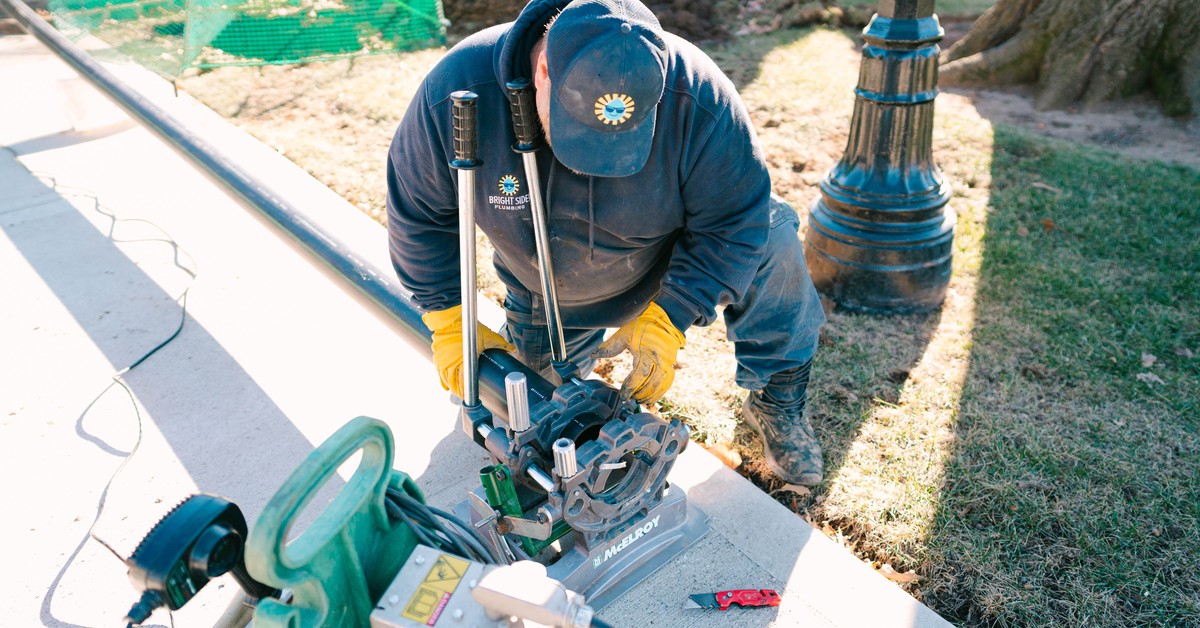
Epoxy lining involves installing a resin-soaked felt or fiberglass sleeve inside your existing sewer pipe, then curing it to create a new structural pipe inside the old one. Once cured, robotic cutting tools re-open branch connections (reinstatements) so that all fixtures can drain properly again.
This is usually the least destructive method, but also, on average, the highest cost. It is especially useful where excavation is difficult, expensive, or highly disruptive (finished basements, high-end landscaping, driveways, city sidewalks, etc.).
Typical material-driven costs (your base price framework, before other added expenses):
Around $250 per foot for 4" epoxy liner (plus $3,000-$10,000 in setup and reinstatement fees)
Around $450 per foot for 6" epoxy liner (plus $3,000-$10,000 in setup and reinstatement fees)
These are per-foot material costs. Total project also includes $3,000-$10,000 in setup, access, and reinstatement fees (reopening branch connections after lining).
Technical cost drivers for epoxy lining:
Epoxy lining system and equipment:
Complete lining systems, including inversion drums, curing equipment, and robotic cutters, are very expensive for contractors to acquire and maintain.
This equipment cost and the expertise required to use it safely and reliably are built into the project price.
The premium is partially offset by the minimal excavation and restoration required.
Pipe size (diameter):
Larger pipe sizes need more liner material and resin, and require more curing energy and handling.
A jump from 4" to 6" pipe dramatically increases material usage and cost per linear foot.
Pipe preparation (cleaning and descaling):
The existing pipe must be thoroughly cleaned so the liner can form a smooth, circular shape.
For clay or ceramic sewers, high-pressure hydro-jetting is used to remove grease, sludge, and small roots. This can cost roughly $750-$2,500 on average, depending on how dirty and root-impacted the line is.
Reinstatements (branch connections):
After the liner cures, every branch that ties into the main line is covered and must be re-opened with robotic cutting equipment.
Complex systems with many tie-ins can see a significant portion of the project cost in robotic reinstatement work.
Access (indoor vs outdoor):
At least one end of the sewer must be excavated to insert the liner.
In an unfinished basement, this may be a small, contained excavation under the slab, often less than five cubic feet of soil, keeping cost and restoration modest.
If the basement is finished, or if equipment cannot be brought inside, a larger outdoor excavation may be required, especially for deeper lines.
Obstacles affecting access:
If outdoor access is required, all the same obstacles, concrete, utilities, additions, apply as with other methods.
In these situations, the cost advantage of "no digging" is reduced, and lining is chosen primarily for technical or structural reasons rather than cost savings.
| Method | Plumbing Cost | Restoration | Best For |
|---|---|---|---|
| Full Excavation | Lowest base | Highest (full trench) | Collapsed lines, severe bellies |
| Pipe Bursting | Moderate | Low (two pits only) | Straight runs, obstacles above |
| Epoxy Lining | Highest per-foot | Minimal | Under structures, finished basements |
Not Sure Which Method Is Right?
$99 camera inspection shows the problem before we discuss solutions. You see the footage. You decide.
(913) 963-10292. Length of Sewer Line Replaced
The length of piping you replace is one of the most direct cost multipliers.
If only a single bad spot exists and the rest of the line is in good condition, you can choose a spot repair instead of full replacement, significantly reducing cost.
If your line has multiple problem sections, widespread material failure (old clay, Orangeburg, heavily scaled cast iron), or repeated blockages, a full or majority replacement may offer better long-term value.
A full replacement will cost more today than a single spot fix, but can save you thousands of dollars over time by avoiding:
Repeated emergency service calls
Property damage from backups
Multiple excavations or lining jobs in different sections
Your total sewer line replacement cost is essentially the per-foot cost of your chosen method multiplied by the length, then adjusted up or down based on depth and obstacles.
Camera Diagnosis First, Always
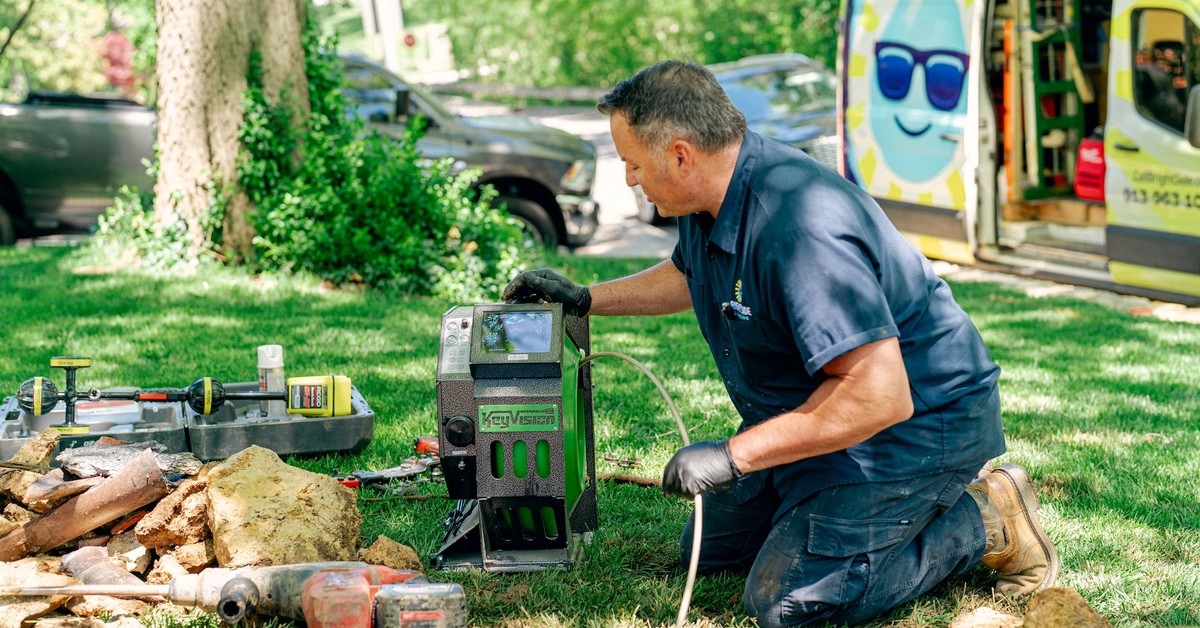
We never quote blind. $99 camera inspection shows exactly what's wrong, where the damage is, and how much pipe needs replacing. You see the footage on screen before we discuss options.
3. Depth of the Sewer Line
The depth of the pipe directly affects:
- Excavation volume
- Equipment size and type
- Safety/shoring requirements
- Risk and insurance liability
The deeper the sewer, the more labor and equipment are required.
Shallow lines (for example, 3-4 feet deep) are generally less expensive to replace.
Any line over 7 feet is considered deep enough that it significantly increases labor, equipment, and liability.
Depths over 7 feet can add thousands of dollars to the project.
Depths over 9 feet can realistically double the project cost, especially when combined with hard surfaces or tight access.
Epoxy lining is less sensitive to depth for the lining itself, but depth still affects access excavation (indoor or outdoor), which can add thousands to the project cost.
How Depth Affects Cost
4. Obstacles to the Sewer Line Replacement
Obstacles are often the single biggest cost factor in a sewer replacement project. All three main replacement methods require at least some excavation and access, so obstacles must be considered no matter which method you choose.
Common obstacles include:
- Concrete driveways and garage slabs
- Streets and sidewalks
- Retaining walls and foundations
- Home additions and decks
- Dense landscaping, trees, and root systems
- Irrigation lines and landscape lighting
- Buried utilities such as gas, power, telecom, and water
- Large rocks and boulders
- Extra excavation time
- Concrete cutting and replacement
- Hand digging around utilities
- Structural support or temporary shoring for walls or slabs
Because obstacles are so site-specific, they are one of the main reasons two houses on the same street can receive very different sewer replacement estimates.
Obstacle Cost Calculator
Check what applies to your property. See estimated additional cost.
Typical ranges from field experience. Camera inspection determines exact scope.
Restoration: Concrete, Grass, Landscaping, and Hidden Obstacles
Underground piping replacement and excavation always involve unknowns that are impossible to predict with perfect accuracy. Soil conditions, hidden utilities, buried rock, and the true extent of damage are only fully revealed once the ground is opened and the sewer is exposed.
Because of this, most sewer replacement estimates are built around the known scope, with clearly defined allowances and separate pricing for items that cannot be reasonably predicted in advance.
Sidewalk and Driveway Reinstallation
To access a buried sewer line, we often must cut and remove sections of concrete or asphalt in:
- Driveways
- Garage slabs
- Sidewalks
- Patios or approaches
Most plumbing companies do not include the cost to reinstall or replace these concrete or asphalt surfaces in their base sewer replacement price. The standard approach is:
- Cut and remove only what is necessary for access
- Complete the sewer replacement
- Backfill and compact the excavation
- Leave final concrete flatwork to a concrete contractor of your choice
At Bright Side Plumbing, we follow this common standard, but we can also offer concrete flatwork replacement options if you prefer a single point of contact for the entire project. This lets you choose between:
- Managing your own concrete contractor for maximum control, or
- Having us coordinate concrete replacement for a streamlined, turnkey solution
Either way, it is important to understand that driveway and sidewalk reinstallation is a separate cost item from the sewer replacement itself.
Grass and Landscaping
On almost every sewer excavation project, grass and landscaping will be damaged or destroyed. Heavy machinery, soil stockpiles, and trenching leave no practical way to preserve turf, shrubs, or decorative beds directly over or adjacent to the work area.
Industry-wide, plumbing contractors:
- Focus on safe excavation, proper bedding, and correct installation of the new pipe
- Provide backfill and rough grade as part of the sewer work
- Do not include final landscaping restoration (new sod, plants, edging, irrigation repairs) in the base price
We are transparent about this from the start so you can plan for:
- DIY restoration
- Hiring a landscaper of your choice
- Or asking us to help coordinate referrals if needed
The key is to view landscaping restoration as its own scope of work, separate from the plumbing and excavation.
Utilities
Before any excavation, we contact 811 ("Dig Right") so that known underground utilities, gas, electric, water, telecom, are marked and flagged by the appropriate providers. This is a critical safety and legal step.
However:
Third-party locators can sometimes be inaccurate or incomplete
Unknown or unmarked utilities can still be encountered once digging starts
When plumbers encounter an unmarked or unknown utility, it causes delays, added care, and coordination that fall outside the original scope. To account for the extra time, risk, and complexity, plumbers can charge an additional amount typically starting at $800 to address these situations and proceed safely.
Large Rocks, Bedrock, and Roots
Subsurface conditions such as large rocks, bedrock, or heavy root masses are usually not detectable before excavation. Once discovered, they can be major obstacles.
Depending on the level of obstruction:
- Removing large rocks or breaking through bedrock
- Cutting and removing extensive tree roots
…requires more time, heavier equipment, and additional disposal. For that reason, rock or root removal typically starts at an additional minimum of $1,000, and can increase based on how much material must be removed and how difficult it is to access.
Change Orders
Even with a camera inspection and locating, only full exposure of the pipe reveals the complete picture. Once the sewer is uncovered, plumbers may find:
- More damage than originally visible by camera
- Additional failing sections beyond the initial repair zone
- Material or configuration issues that make a larger repair more sensible
In those cases, you may choose to expand the project scope to repair or replace more of the sewer piping while the trench and equipment are already in place. Because this expanded work goes beyond the original estimate, sewer repair change orders start at an additional minimum around $3,000 with final pricing based on added length, depth, and complexity.
These allowances and minimums exist to keep your base estimate focused and honest, while giving clear, upfront structure to how unforeseen conditions are handled if and when they arise.
5. Legalities of a Sewer Line Replacement
Several legal and administrative items also affect your sewer line replacement cost. These involve your city, your insurance or warranty providers, and the plumbing contractor.
A. Permits
Most municipalities require building or plumbing permits for sewer line replacement or significant repair.
Permit fees vary, but you should expect that your contractor will include permit costs, coordination with inspectors, and potential down-time while waiting for inspection sign-offs.
These costs are typically built into the front end of the project estimate, not tacked on afterward.
B. Fines
Fines are rare but possible if a contractor works without required permits, is not properly licensed, or damages city utilities, mains, or property.
Reputable, licensed contractors price their work to account for proper permitting and insurance, reducing your risk of surprise fines.
C. Insurance Coverage
Many homeowners have insurance policies that may cover damage inside the home from sewage backups and sometimes portions of indoor excavation and concrete replacement for sewer access.
Exterior sewer replacement coverage varies widely and is often limited or excluded unless a special rider is purchased.
When coverage applies, it can offset a portion of your sewer line replacement cost, particularly for interior portions of the job.
D. Home Warranties
Some home warranty plans offer sewer line coverage. When they pay, they can cover most or all of a small to average-sized project.
Key details to verify include whether exterior sewer lines are covered, any length and depth limits, and any contractor or method restrictions.
Many warranty plans only cover full replacement once the line has completely failed (collapse), which means you may endure repeated backups and snaking before coverage applies.
E. Plumbing Contractor Warranty
Contractors typically include some form of warranty on the sewer work they perform.
Warranties can range from short-term, parts-only coverage to multi-year or lifetime full parts and labor coverage.
A stronger warranty can slightly increase sewer line replacement cost, especially when the contractor stands behind both materials and labor for the long term.
Bright Side Lifetime Warranty
Our sewer replacements are warrantied for the life of your home. Both materials and labor.
The Bottom Line on Sewer Costs
Sewer Line Replacement Financing
A sewer line replacement is often an unexpected and significant expense, and it usually cannot be postponed without risking damage to your home and health. Financing is one of the most powerful tools available to reduce the immediate burden and let you move forward with the work you need.
Many professional plumbing companies, including ours, partner with lenders to offer flexible financing options designed specifically for projects like sewer line replacement.
12-Month No Interest, No Payments (For Well-Qualified Customers)
For well-qualified homeowners, we can often arrange 12 months with no interest and no payments. During that period:
You get your sewer line repaired or replaced now, not later.
You have time to budget and plan without an immediate payment shock.
If you pay the balance in full within the promotional period, you can often complete the project with no interest at all.
This structure is especially helpful for families who have good credit but did not plan for a large plumbing expense this year. It lets you protect your home and keep your household running while you adjust your finances on your own schedule.
Sewer Replacement Financing for Poor Credit Scores
We also understand that not everyone has perfect credit, or any warning that a sewer line failure is coming. For those situations, we work with financing partners who offer hardship-style options for lower credit scores.
These programs are designed to:
Help homeowners with challenging credit histories still qualify for necessary repairs.
Spread payments out over time so the project is manageable on a monthly budget.
Allow you to continue using your home and sewer system with dignity, even if cash on hand or credit are not ideal.
Our goal is that no homeowner is forced to live with sewage backups, unusable plumbing, or unsafe conditions simply because the failure was unexpected.
How Financing Helps in Real Life
With the right financing plan, you can:
Approve the correct, long-term solution instead of a temporary patch.
Avoid draining savings or emergency funds all at once.
Keep your family's routine intact, showers, laundry, cooking, and bathroom use, without delay.
When we provide an estimate, we can also show you real monthly payment options so you can choose the combination of scope and terms that best fits your situation.
Monthly Payment Estimator
For illustration only. 12-month no interest for well-qualified customers.
Estimating Sewer Line Replacements Is Complex
There is no one-size-fits-all price for sewer line replacement. The total cost is the result of the replacement method, pipe length, depth, obstacles, legal requirements, insurance or warranty coverage, and financing choices.
A licensed master plumber with experience in sewer diagnostics and replacement can evaluate your specific situation, perform a sewer camera inspection and locating, and present realistic options with clear pricing.
Sewer Line Replacement Cost Factors You Can Control
Many factors, existing depth, buried obstacles, pipe size, are out of your control. But several important decisions are yours to make:
- Replacement method: full excavation, trenchless pipe bursting, or epoxy lining, when multiple options are feasible.
- Scope: spot repair vs partial or full replacement.
- Timing: addressing issues early vs waiting until complete failure.
- Protection: purchasing insurance riders or home warranty coverage in advance.
- Contractor choice: selecting the plumbing company you trust to do the work correctly and stand behind it.
Get a Detailed Sewer Line Replacement Cost from a Master Plumber
If you want to know your exact sewer line replacement cost, the next step is to have your system evaluated on site.
At Bright Side Plumbing, a licensed master plumber will:
- Perform a sewer video scope inspection
- Accurately locate your sewer line and depth
- Identify all viable replacement options
- Provide a clear, written estimate and explain how each of the five major cost factors applies to your property
Call us or contact us through our website to schedule a free, no-obligation quote and sewer video inspection. We'll help you choose the option that protects your home and your budget for the long term.
Get a Detailed Sewer Line Replacement Estimate
Camera inspection. Options explained in plain English. Upfront pricing. Financing available.
Call (913) 963-1029